
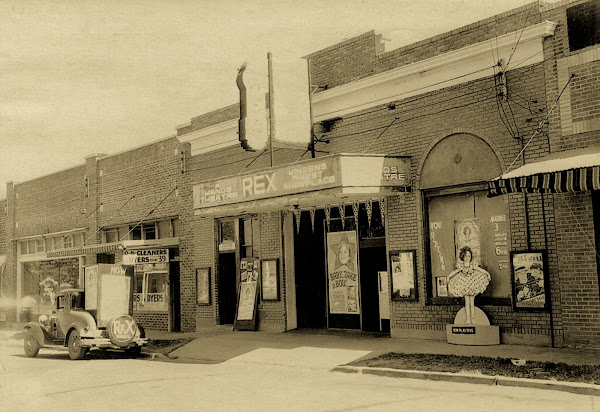
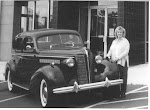
116 Pearl Street Then

116 Pearl Street Then
1920's Photo of Pearl Street

116 Pearl Street Today

116 Pearl Street Today
Our new location

Welcome To The Dorcheat Museum Blog

Thank you for visiting the Dorcheat Historical Association and Museum Blog. The Dorcheat Historical Museum opened June 10th, 2008. Our hours are, Tuesday - Friday from 10 a.m. - 1 p.m., closed for lunch from 1 p.m. - 2 p.m., open again from 2 p.m. - 4 p.m. Saturday hours are 10 a.m. - noon and also by appointment for special showings and meetings. We would like to invite you to visit our location at 116 Pearl Street in Minden, Louisiana. We look forward to sharing our history with you.
For more information please contact museum director
Schelley Brown at 318-423-0192.

Help Keep The Past Alive

Help Keep The Past Alive

Hours of Operation & Map

Hours of Operation & Map
RIGHT CLICK ON PICTURE TO SAVE AND PRINT

Our Museum Blog Visitors Far and Wide

Marathon on Broadway

Marathon on Broadway
Put Your Dancing Shoes On And Show Your Support Of The Museum

Marathon On Broadway

Marathon On Broadway
Don't Miss This Fun Way To Raise Money

Some Important Information

"Marathon On Broadway"

Dorcheat Historical Association Takes Part In Festival Of Memories… By Remembering the Great Depression
Dance Marathons of the 1920s and 1930s
Dorcheat Historical Association Takes Part In Festival Of Memories… By Remembering the Great Depression
The Dorcheat Historical Association invites you to put your dancing shoes on for the November 6th - 7th, 2009 24 hour “Marathon on Broadway”. This dance marathon reminiscent of the marathons that became fads during the depression era will be a step literally back in time, with dancers competing for the chance to win some big money! This event will take place at the Minden Civic Center as a fundraiser for the museum. The event will be open to the public for viewing with a $5.00 admission fee. Food and drinks will be available for purchase on site. Participants will be in 3 categories with dancers as young as 12 allowed to dance with a guardian’s permission. Prizes awarded in all categories plus a Grand Prize of $1000 will be awarded to one lucky winner. Pre-registration is $20 per person, $25 per person day of event. Age divisions are as follows 12-40, 41-59, 60 plus. Museum director Schelley Brown stated, “The different age groups will be dancing for different lengths of time. But anyone that would like can dance the entire time to compete for the $1000 Grand Prize. If you dress in 1920s – 30s costume you can also earn extra break passes. This is going to be something that we hope our teens as well as our 40 plus crowd participates in!” Don’t miss lots of fun, music and food for everyone. Brown stated she also needs volunteers to help with this event. For more information please contact Schelley Brown at 318-423-0192.

Marathon on Broadway


2009 Dancer Registration Form
This from is to be used for registration purpose only.
Fee is $20 per person pre-registration. Day of marathon fee is $25 per person. Checks must be made out to the Dorcheat Historical Association Museum, Inc. Mail checks to Dorcheat Museum P.O. Box 1094 Minden, La. 71058. Pre-registration ends October 31st.
Name of Contestant: Please Print

___________________________________________________________________
Parent or guardian signature if dancer is under the age of 18 plus a contact phone number in case of emergency.

________________________________________________________________________
Signature Contact Numbers

Address: _______________________________________________________________
Street City State Zip
Marathon on Broadway Waiver of Liability, Assumption of Risk, and Indemnity Agreement
!!!!DANCE AT YOUR OWN RISK!!!!
Waiver: In consideration of being permitted to participate in any way in the “Marathon On Broadway” Dance Contest, hereinafter called “The Marathon”, I for myself, my heirs, personal representatives or assigns, do hereby release, waive, discharge, and covenant not to sue the Dorcheat Historical Association Museum, Inc. board members, museum members, employees, Minden Civic Center employees, City of Minden and its employees, Cultural Crossroads, Inc. board members and employees, owners and employees of Coca-Cola Bottling of Minden, Inc., Party Express Catering owners and employees and any other persons or company associated with the “The Marathon” from liability from any and all claims including the negligence of “The Marathon” , resulting in personal injury, accidents or illnesses (including death), and property loss arising from, but not limited to, participation in “The Marathon”.
Assumption of Risks: Participation in “The Marathon” carries with it certain inherent risks that cannot be eliminated regardless of the care taken to avoid injuries. The specific risks vary from one activity to another, but the risks range from 1) minor injuries such as scratches, bruises, and sprains, 2) major injuries such as eye injury or loss of sight, joint or back injuries, heart attacks, and concussions to 3) catastrophic injuries including paralysis and death.
I will obey the rules of “The Marathon” This is a family fun activity and we want everyone to enjoy the event. We ask that the following rules be followed or you will be asked to leave “The Marathon”: 1) No wild or dirty dancing behavior at any time. 2) No drinking of any alcoholic beverages is allowed on City of Minden Property. 3) No profanity, fighting, pushing or shoving is allowed during “The Marathon” 4) Proper attire is required for all participants.
I have read the previous paragraphs and I know, understand, and appreciate these and other risk that are inherent in “The Marathon”. I hereby assert that my participation is voluntary and that I knowingly assume all such risk.
Indemnification and Hold Harmless: I also agree to INDEMNIFY AND HOLD “The Marathon” volunteers, organizers, and all sponsors and any other participants HARMLESS from any and all claims, actions, suits, procedures, cost, expenses, damages and liabilities, including attorney’s fees brought as a result of my involvement in “The Marathon”
Severability: The undersigned adult 18 or over further expressly agrees that the foregoing waiver and assumption of risks agreement in intended to be as broad and inclusive as possible to protect ALL persons and or businesses, and City of Minden affiliated with “The Marathon”.
Acknowledgment of Understanding: I have read this waiver of liability, assumption of risk, and indemnity agreement, fully understand its terms, and understand that I am giving up substantial rights, including my right to sue. I acknowledge that I am signing the agreement freely and voluntarily, and intend by my signature to be a complete and unconditional release of all liability to the greatest extent allowed by law. You must be a parent or guardian or adult to sign below.

SIGNED______________________________________________________DATE_________________
A little marathon history to get you started.

Dance Marathons were an American phenomenon of the 1920s and 1930s, where human endurance contests in which couples danced almost non-stop for hundreds of hours (as long as a month or two), competing for prize money. Dance marathons originated as part of an early-1920s, giddy, jazz-age fad for human endurance competitions such as flagpole sitting and six-day bicycle races. Dance marathons persisted throughout the 1930s as partially staged performance events, mirroring the marathon of desperation Americans endured during the Great Depression. In these dance endurance contests, a mix of local hopefuls and seasoned professional marathoners danced, walked, shuffled, sprinted, and sometimes cracked under the pressure and exhaustion of round-the-clock motion. A 25-cent admission price entitled audience members to watch as long as they pleased. Dance marathons were held in Spokane, Seattle, Yakima, Wenatchee, Bellingham, and elsewhere. They occupied a slightly disrespectable niche in society, and many towns banned them, finding them disruptive, disturbing, and even repugnant.
Dance marathons were known as "bunion derbies," and "corn and callus carnivals." Promoters called them "walkathons." Social dancing had only recently acquired a veneer of respectability through the efforts of wholesome married dance teams like Vernon and Irene Castle. At a time when many churches still considered dancing sinful, "walkathon" was a less threatening term. But today we remember these endurance contests of the Great Depression as "dance marathons."
Dance marathons were both genuine endurance contests and staged performance events. Professional marathoners (often pretending to be amateurs) mixed with authentic hopeful amateurs under the direction of floor judges, an emcee, and the merciless movement of the clock to shape participatory theater. Both grim spectacle and vaudeville-based amusement, dance marathons offered an inexpensive chance for audiences “to be entertained and while away time” They also offered audiences the Depression-era novelty of feeling superior (and feeling pity) toward someone else.
Despite their controversial status, during the 1930s dance marathons were entrenched in American culture. Dance marathon historian Carol Martin reports that nearly every American city of 50,000 people or more hosted at least one endurance dance marathon.
Fifteen minutes each hour were allotted for rest. When the air horn signaling a rest period sounded, the contestants exited the dance floor for curtained-off rest areas filled with cots. These rest areas were segregated by sex. Contestants trained themselves to drop instantly into deep sleep as soon as their bodies touched the cots. After 11 minutes the air horn sounded again and the contestants filed back onto the dance floor to begin another hour. Female contestants who didn’t wake at the end of 11 minutes were revived with smelling salts (and slaps), and male contestants were often dunked in a tub of ice water.
Medical services were available to contestants, usually within full view of the audience. Physicians tended blisters, deloused dancers, disqualified and treated any collapsed dancer, tended sprains, and so on. "Cot Nights," in which the beds from the rest areas were pulled out into public view so the audience could watch the contestants even during their brief private moments, were also popular. The more a marathon special event allowed the audience to penetrate the contestants’ emotional experience, the larger crowd it attracted.
By the late 1930s, dance marathons had faded from the cultural landscape. Ordinances prohibiting the contests, combined with dwindling "virgin spots," discouraged promoters. America’s entry into World War II sent former marathoners and their audiences to work and to war. Glimmers of the fad remained, however, in roller derbies, which were televised and persisted into the 1960s, and in walkathon/fun runs benefiting charity. Even dance marathons themselves resurfaced, albeit in a form so tame as to be unrecognizable, as charity fundraisers. These modern marathons are usually 12-24 hours, a far cry from the Spokane show that closed October 12, 1935, after 1,638 hours (about two months).

Membership and Contribution Levels

Please left click to highlight this area then right click to copy and paste into a word document that you can print.

Membership Dues and Contribution Levels:
· Individual - $20.00

· Family - $40.00
· Sustaining - $75.00
· Patron – $125.00 -
· Benefactor – $250.00 -
· Corporate - $500.00
· Bronze - $1000 - $2,499
· Silver - $2,500 - $4,999
· Gold - $5,000 - $9,999
· Platinum - $10,000 – 24,999
· Diamond - $25,000 & up
· We also have a stock transfer plan for your contributions

In return for your support, you will receive not only a tax deduction, but also, invitations to all museum activities. Please give every consideration to helping with this endeavor. Be a part of Webster Parish history by becoming a member of the Webster Parish Dorcheat Historical Association and Museum.
Dues and pledge contributions may be mailed to:

Dorcheat Historical Association Museum
PO Box 1094

Minden, Louisiana 71058.

Friday, June 6, 2008

The Long Awaited Dorcheat Museum is OPENING!

Dorcheat Historical Association Museum Open June 10th, 2008
Dorcheat Historical Association Museum is making history happen in 2008 for not only Minden put for everyone that has an interest in our community known as Minden, Louisiana and Webster Parish. The dream for a state of the art historical museum to collect, preserve, and exhibit the history of our parish is now a reality.
Under the leadership of President Thad Andress the absence of a local museum has finally been remedied. The Association has been doing serious fundraising drives to turn the building on Pearl Street into a museum that will not only preserve our heritage, but also be something the community can be proud of and show-off to all visitors.
This past year has been a busy year for the Dorcheat Museum. This year the museum has spent over $175,000 in building renovation and exhibit design. The facility at 116 Pearl Street not only boasts a new façade and roof, it has undergone a complete renovation in the front area. Much more is still to come with the renovation of the back area to be known as “The Children’s Learning Center”. This area will house a stage with seating for 80 plus people to enjoy talks, films and documentaries. This learning center will be a huge asset to our children in our community. “This museum is not just a few people’s museum it is all of ours and we want everyone in the parish involved and taking part in making it the success that we know it will be! We will always need funding and support from our community. Preserving our history is something I am passionate about. If we don’t’ teach our children where we have been with our parish history we are doing a terrible injustice to future generations!” stated Museum Director, Schelley Brown.
This museum will be financed through pledges, private donations and grants. We project that the operating budget will be in the neighborhood of $60,000 a year. Your partnership is vital during this exciting time in the life of the museum. Your membership is important not only to complete this project but also to maintain the day-to-day operation of the museum.
With a large grant in 2007 from the Webster Parish Convention and Visitors Bureau large dioramas were built by local artist Larry Milford depict life from the early Indians along Dorcheat Bayou to present day Webster Parish with the story line researched by local historian John Agan.
The Dorcheat Historical Association Museum is the culmination of a dream that began in the fall of 1974, when, under the leadership of Mrs. Beth Drew White, this organization was formed to preserve the history of Webster Parish. Through the ensuing years the organization suffered many setbacks and trials, but the museum you will see today will represent a triumph over these difficulties.
Perhaps the best glimpse of life in our area comes through the photographs and written records that will be on display. The museum will have photographs of businesses, government buildings, homes and schools from our past. These photographs give a glimpse into life as it once was here in our area. With the help of everyone the museum will constantly be adding objects and modifying our displays for years to come.
The history begins with Dorcheat Bayou, the namesake of the organization and the stream that brought European settlement to our area and today ties our parish together. It will trace the story of local life from those years when European and Native Americans first met, on through the many trials and tribulations, along with the good times that make up local history. As you progress through the museum you will move forward through time and see how communities evolved.
The Dorcheat Historical Association wants to make sure it is clear to everyone that this museum is for “all of us.” It will chronicle as much as possible the entire historic experience of Minden. You will find the story of your heritage there if you are a member of the “first families” living in an antebellum mansion, or you are a descendant of the railroad families who came here in the 1920s. The story will include the record of the African American families and their fight to move from slavery, through the Civil Rights struggles of the 19th and 20th Century. It will include the unique contributions made by local residents in areas such as sports, music, industry and education. In short, for those of you who find Minden and Webster Parish a wonderful place to live, the museum will provide a picture of all those things that make this that place you love.
The contributions made by local residents in areas such as sports, music, industry and education will also be highlighted. The early businesses, churches, schools, and architecture and history of the antebellum homes will be highlighted.
The Dorcheat Historical Association Museum President, Mr. Thad Andress and wife Oneta Andress recently represented our new parish museum at the Louisiana State Capital building in Baton Rouge, during the annual Louisiana Association of Museums Conference which was held this year in the rotunda of the Louisiana State Capital Building. State dignitaries were on hand with a visit by Louisiana Senator Robert Adley, State Representative Jean Doerge and Malcolm G. Myer of the Louisiana Attorney General’s office.
Many visitors were quite impressed with the local museum’s display and what Minden and Webster parish will have to offer with the Tuesday, June 10th opening of the museum located at 116 Pearl Street. For the month of June the admission price will be waived. Normal admission price is $4.00 adults and $2.00 for children under 12. Museum hours will be Tuesday-Friday 10 a.m.-1 p.m. closed from 1 p.m. – 2 p.m. for lunch and opened again from 2 p.m. - 4 p.m.; Saturday hours will be 10 a.m. – 12 noon and for special showings and meetings, appointments can be set up in advance by calling 318-377- 3002 or 318-423-0192.
The museum in the past three months has hosted wonderful nights of history for everyone to enjoy, free of charge. Mark you calendars now and keep the second Monday of every month open for “Night for the Museum Historic Events”. Museum coordinators are again expecting a large turnout for the June 9th with “Greatest Generation Member” Mr. George Turner. You may want to bring your lawn chairs again just in case of a shortage of seating! The last three months performances by Mr. Frank Griffith, Marcus Wren and Webster Nation were both held to packed houses. These types of events are something the museum wants to offer on a regular basis as entertainment and a living history lesson. July’s event will feature Dr. Steve Kirkikis and several other families that came to Minden via Ellis Island. This informative night dealing with the immigrant families that had such a huge and important influence on Webster Parish should be another big success.


Be a part of something BIG!
Membership Dues and Contribution Levels for 2008:
· Individual - $20.00
· Family - $40.00
· Sustaining - $75.00
· Patron – $125.00
· Benefactor – $250.00
· Corporate Member - $500.00
· Bronze - $1000 - $2,499
· Silver - $2,500 - $4,999
· Gold - $5,000 - $9,999
· Platinum - $10,000 – 24,999
· Diamond - $25,000 & up
· We also have a stock transfer plan for your contributions; see Thad Andress for details

In return for your support, you will not only receive unlimited admission to the museum, but also, invitations to all museum activities. Please give every consideration to helping with this endeavor. Be a part of Webster Parish history by becoming a member of the Webster Parish Dorcheat Historical Association and Museum. Dues and donations for 2008 may be mailed to PO Box 1094, Minden, Louisiana 71058.
For more information on the Dorcheat Historical Association Museum you can call museum director, Schelley Brown at 318-423-0192 or visit http://www.museuminminden.blogspot.com/

0 comments: